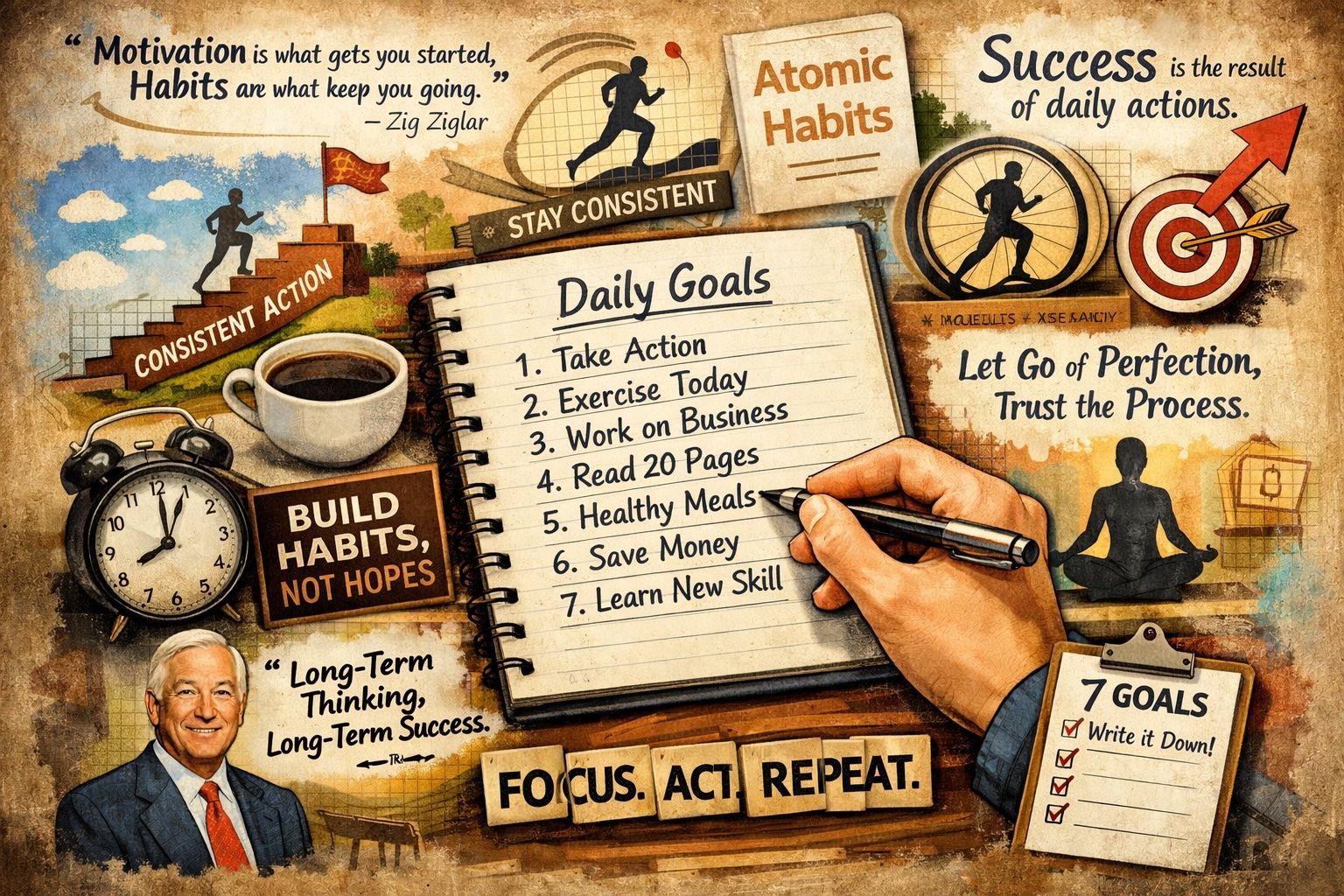
The Secret to Success (Really!)

grant • June 23, 2019

What helping over 300 business start ups has taught me

Over the last few years I've helped hundreds of people through the early stages of starting a business, and I'd like to share an observation with you that I know will be of interest if you are thinking of taking the plunge.

Firstly, hats off to anyone who pulls the trigger on starting a new business. It's still an immensely inspiring conversation to have the first time I speak to a brand new business owner, usually, the enthusiasm is palpable along with a good dose of nervousness and optimism.

In this first few weeks of trading I've noticed some commonalities between people that never end up making a success and those that smash it. So if you are thinking of taking the plunge and beginning the life of an entrepreneur, I'd pay attention to this.

Procrastination.

We all procrastinate to some extent, the key is realising this. Procrastination comes in many forms and just because you are busy, it doesn't mean you aren't procrastinating.

All too often, with the new start ups I work with, they keep busy with tasks that they kid themselves into thinking are what they should be doing. However, just because they are doing "stuff" it doesn't mean it's the right "stuff".

An example would be spending too much time trying to think of every eventuality that could come up in a sales presentation instead of booking the presentations in the first place. I see this one a lot. The fear of feeling embarrassed in front of a prospect because there are questions that they may not be able to answer stops them from taking the action required.

So instead of taking meaningful action there's more learning, training, faffing about with systems, etc etc, instead of the work that is actually going to make them money.

Successful entrepreneurs however don't wait, they throw themselves in and figure it out as they go. They still have the fear but they use it to educate themselves whilst they are learning how to make money too.

So what is the solution to helping more entrepreneurs be like the action taking group?

I've thought about this A LOT and that's why at BLAM! we've built a system that means that our partners follow a path to making their business successful. This stops the excuses a tracks the actions.

It focusses around these three stages:

1. We have a certified training course that needs to be completed in an agreed amount of time.

2. Next we have an accountability system that tracks actions that lead to success.

3. Then we have ongoing support, mentoring and training through our entrepreneurial community.

So, the key to avoiding procrastination (which really is the key to success)? Accountability to your actions , it's simple but effective.

If you want to learn more from entrepreneurial advice be sure you've signed up to BLAM! Academy here , it's FREE and a great resource for budding entrepreneurs or business owners alike.

By Grant Stain February 22, 2026
Let me guess: you've been scrolling through Instagram, watching people your age sipping cocktails on a beach at 2PM on a Tuesday, captioning it "living the laptop lifestyle" or "escaped the 9-5 grind." You've seen the Lamborghinis, the "passive income," the overnight success stories. And you're thinking, "Yeah, I could do that. I'll work hard, hustle a bit, post some motivational quotes, and boom, financial freedom." Right? Wrong . Listen, I've coached over 300 startups through their early days, and I need to tell you something that the Instagram gurus won't: most people who start businesses fail. And I don't mean they fail spectacularly in some heroic blaze of glory. I mean they quietly earn less than they did in their job, work twice the hours, and eventually slink back to employment with their tail between their legs. Sound harsh? Good. Because if that scares you off, you've just saved yourself years of pain and a hefty chunk of money. The Numbers Don't Lie (Even When We Want Them To) Let's talk facts, because I'm not here to blow sunshine up your backside. " Only 4% of startups ever hit £1 million in turnover." Four percent. That's 96 out of every 100 businesses never getting anywhere near that magical seven-figure mark that sounds so good on a podcast. And for those lucky few who do? It takes an average of 2.5 to 3 years minimum. Many don't see it within 5 years. That's three years of grinding, pivoting, barely paying yourself, and wondering if you've made a massive mistake. Here's the kicker: " 41% of small business owners earn less than they did in their previous 9-5 job ." Less. After all that risk, all that stress, all those 60-hour weeks, they'd have been better off financially staying put. Over 20% of businesses fail within their first year. Nearly half don't make it to year five. And of those solo entrepreneurs dreaming of building a team and "scaling"? Only 3-17% ever grow to hire employees and become actual employer firms. These aren't stats I'm pulling from some doom-and-gloom think piece. This is reality. This is what happens when passion meets market forces, when optimism crashes into cash flow problems, when "I have a great idea" meets "the customer doesn't actually care." So Why Am I Telling You This? Am I trying to put you off? Kill your dreams before they start? Absolutely not. I'm trying to save you from being another statistic. Another person who quit their job on a wing and a prayer, burned through their savings in 18 months, and had to explain to their family why they're moving back in at 34. The issue isn't that entrepreneurship is hard, we all know it's hard. The issue is that most people think they're ready when they're absolutely not. They confuse excitement with preparation. They mistake motivation for capability. After working with hundreds of founders, I can tell you this: " Entrepreneurship isn't about the destination, it's about whether you've got the foundations to survive the journey." The lifestyle you see on social media? That's year 7, not year 1. And most people never make it past year 2. The Unsexy Truth About What It Actually Takes Here's what nobody posts on Instagram: You're going to work more hours than you ever did in your job. Your first year? Think 50-60 hours a week, minimum. Weekends included. No, you can't outsource everything on day one, you haven't got the money. You're going to earn less. Probably for at least the first year, maybe longer. Can you handle that? Can your family? Your mortgage lender? You're going to question yourself constantly. Every day you'll wonder if you're deluded. Every setback will feel personal because it is personal, this is your baby. You need to actually know how to run a business. Not just do the thing you're good at, marketing, design, whatever, but understand P&Ls, cash flow, break-even points, customer acquisition costs. When's the last time you read a balance sheet? Do you know what gross margin means? These aren't optional extras. They're the difference between profit and bankruptcy. You need support systems. Mentors who've been there. A partner who understands why you're stressed. Friends who won't roll their eyes when you cancel drinks for the third week running. Family who won't tell you to "just get a real job" the first time things get tough. Before You Quit Your Job, Answer These I've developed a framework over the years for assessing readiness. Not readiness to have an idea, everyone's got ideas. Readiness to actually build a business that doesn't destroy your life. Can you honestly answer yes to these? - Have you done the research and actually understand the market? - Do you have 6-12 months of living expenses saved (not just "some savings")? - Have you created a proper business plan with realistic financial projections? - Do you know your break-even point and startup costs down to the pound? - Can you identify your exact target customer and why they'll buy from you instead of your competitors? - Are you prepared to potentially earn less for the next 2-3 years? - Does your family support this decision, or are you going to be fighting battles on two fronts? If you're hedging on more than two of these, you're not ready. And that's okay, better to know now than after you've burned your bridges. It's About the Foundations, Not the Flash Look, I'm not trying to crush your entrepreneurial spirit. I've built businesses. I've helped 300+ companies get off the ground. I believe in entrepreneurship, done right. But "done right" means building proper foundations before you start stacking up floors. It means developing the skills, knowledge, and mindset that separate the 4% from the 96%. The entrepreneurs who make it aren't necessarily the most talented or the ones with the best ideas. They're the ones who prepared properly. Who learned the fundamentals. Who built systems instead of winging it. Who understood that success is about doing boring things consistently, not having one viral moment. They're the ones who treated entrepreneurship as a serious professional decision, not an escape plan from a job they didn't like. The Real Question So here's what I want you to ask yourself: are you running toward something, or running away from something? If you hate your job and think starting a business will be easier, I've got bad news. It won't. It'll be harder in ways you can't imagine. But if you're genuinely prepared to work harder than you've ever worked, to learn things that don't come naturally, to sacrifice lifestyle in the short term for a potential long-term payoff, and you've got the foundations in place, the knowledge, the savings, the support, the actual plan, then maybe, just maybe, you're ready. And if you're not ready yet? That's brilliant. Because now you know what you need to work on before you take the leap. The wannabe entrepreneurs quit their jobs tomorrow and hope for the best. The real entrepreneurs build their foundations first , develop their skills, understand the reality of what they're getting into, and then make their move from a position of strength, not desperation. Which one are you going to be? To your success, Grant

By Grant Stain February 8, 2026
This is a subtitle for your new post
By Grant Stain January 25, 2026
(And Why It's Actually Rude to Try and Guess)
By Grant Stain January 18, 2026
Are You Making These 5 Fatal Startup Mistakes? What 15 Years Coaching 300+ Companies Taught Me
By Grant Stain January 11, 2026
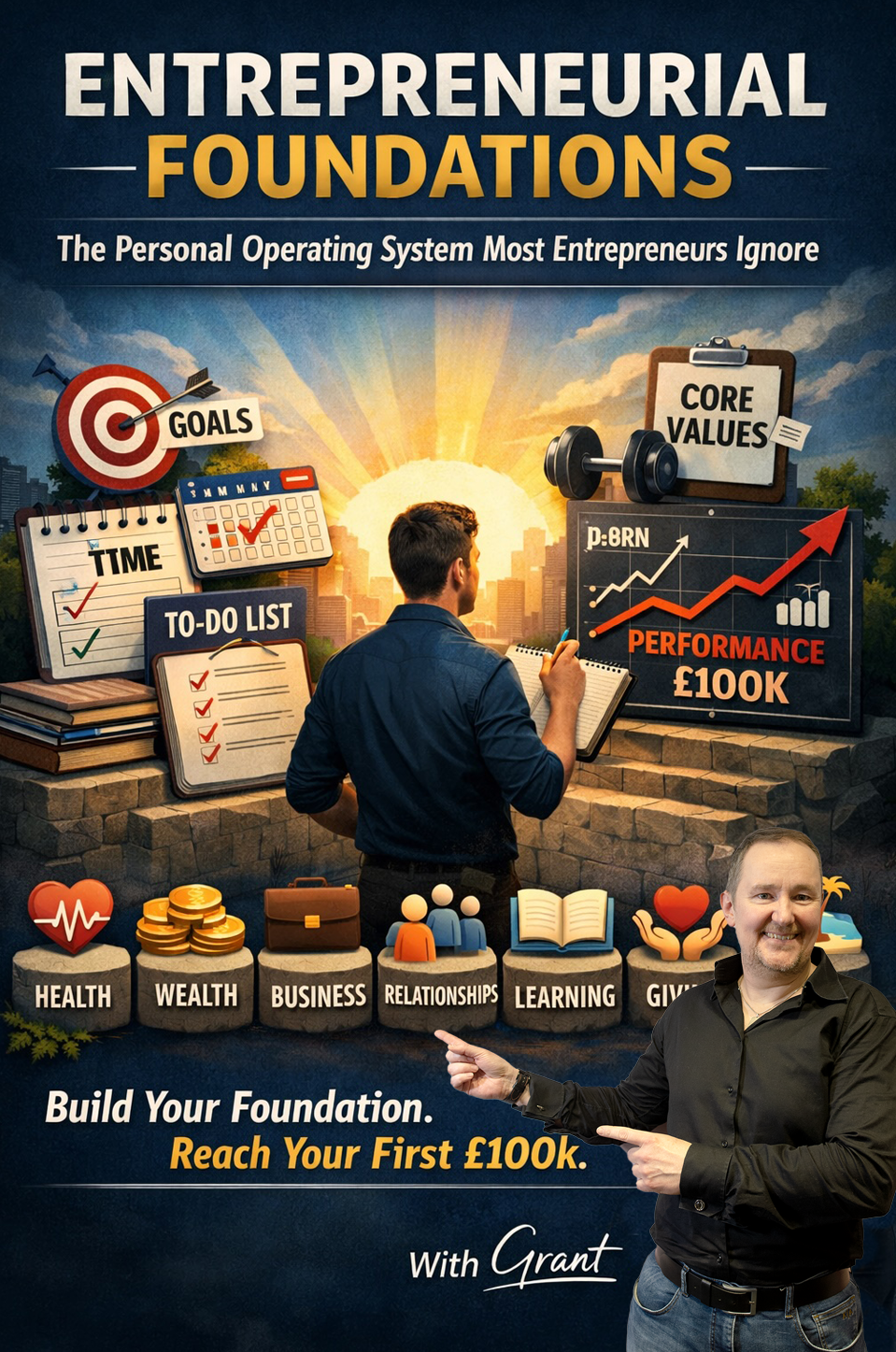
The Personal Operating System Most Entrepreneurs Ignore
By Grant Stain January 4, 2026
Every January, people don’t fail because they lack motivation...
Clipboard with
By Grant Stain December 28, 2025
Why Most People Get It Wrong, and How to Fix It
By Grant Stain December 15, 2025
Breaking Down the Real Numbers and Hard Truths
By Grant Stain November 30, 2025
Do You Really Need a Perfect Morning Routine?
By Grant Stain November 24, 2025
Most people think entrepreneurship is about the big ideas, the brand, the logo, the pitch. It is not. Those things are surface-level. The real work, the stuff that makes your business durable and worth something, happens underneath. It is the foundations. And if you get these right, everything else becomes easier, faster and more profitable. This is the part nobody glamorises, yet it is exactly what separates the people who build something meaningful from the people who stay stuck in project mode, earning bits here and there and wondering why nothing ever scales. So let us break down the fundamentals that give you stability, clarity and momentum. Diary management: control your time or your time controls you Successful entrepreneurs act like architects. They design their days with intention. They do not wake up and hope the day behaves. They decide what gets their focus and when. Your diary is not a list of tasks. It is the engine room of your entire business life. Block your strategy time. Block your prospecting. Block your client delivery. Block your learning. If it is not in the diary, it does not happen, and if it does not happen, it does not grow. The entrepreneurs who win are the ones who learn to protect their time with discipline. Core values: the guardrails that keep your business sane Values are not fluffy statements. They are decision making tools. When your business grows, when you take on clients, when you hire, when the pressure turns up, you need a set of rules that guide your behaviour and keep you aligned. Your values decide who you work with, how you show up, and what you refuse to tolerate. They stop you chasing the wrong clients and they keep your team rowing in the same direction. Get clear on your values and you instantly make your business easier to run. SOPs: the unsexy secret of scalable entrepreneurship Most small business owners run everything from their head. That is fine at the start, but it is a bottleneck once you have any traction. Standard Operating Procedures remove the chaos. They turn your daily work into a repeatable system. Every repeat task needs a process. Onboarding. Content creation. Lead follow up. Campaign setup. Reporting. Document it, refine it, then follow it. SOPs are how you scale without losing quality. They are how you stop firefighting. They are how you build a business that can run without you. Ignore them and you will stay trapped in the weeds forever. Goal setting: clarity creates momentum Most people drift. Entrepreneurs who succeed set targets and track them. You need clarity on what you want in ninety days, twelve months and three years. You do not need complicated frameworks. You need simple, measurable commitments that force progress. More clients. More recurring revenue. A better offer. A stronger brand. Whatever matters, write it down and make it visible. Momentum builds from clarity, not guesswork. Measurement: the truth behind your decisions If you are not measuring, you are guessing. Guessing is expensive. You need numbers to tell you what is working and what is not. Track your leads, conversions, revenue, retention and activity levels. Data gives you calm, confidence and control. It helps you make tough calls without emotion. It stops you wasting money. It shows you where to focus. Entrepreneurs who measure scale faster, because they can see the real story. Habits: the compound interest of entrepreneurship Your outcomes are the result of your habits, not your intentions. The small behaviours you repeat daily create your identity as an entrepreneur. Reading. Learning. Prospecting. Following up. Improving your offer. Turn these into habits and your growth becomes automatic. Habits build discipline and discipline builds freedom. Resilience: the essential tool nobody teaches You will get knocked about in business. That is guaranteed. The market does not care about your plans and your clients do not care about your excuses. Resilience is what keeps you moving when things take longer than expected. The good news is that resilience is built through action. Every time you face a challenge and push through it, you strengthen your foundation. You become sharper, calmer and more relentless. That is the real edge in entrepreneurship. Build your foundations and everything else becomes easier If you want to grow a digital agency or any small business, do not start with fancy tactics. Start with the basics. These are the pillars that support every high-performing entrepreneur. Your diary gives you control. Your values give you direction. Your SOPs give you scale. Your goals give you purpose. Your measurements give you truth. Your habits give you consistency. Your resilience gives you staying power. Get these foundations in place and you become unstoppable. Skip them and you stay busy without progress. Build properly and your business becomes a vehicle for freedom, not stress. The early work feels tedious, but it sets you up for the long haul. Master the fundamentals and everything you touch becomes easier, faster and more profitable. To your success, Grant