One thing that is going to make you successful
Blam Websites • November 29, 2020
The one common trait of all successful people!

Is it dreaming about success that keeps you awake at night? If so, you’re just like me and every other true entrepreneur. The business ideas, the lifestyle dreams, the people you could help, the lives you can change. Having the ideas and the vision is only the beginning, but a vital part of the process. So how do you take those dreams and make them a reality?
"The million dollar question, literally!"
There have been so many books, films, courses, systems and groups dedicated to the theory of success and I have studied many of them. And yet, despite a good proportion of this material having valuable content, the percentage of people that consume it and then achieve success, is small.
Why do you think this is, and has this happened to you?
Some will argue that time is the issue, some will make other excuses like money or lack of support, some will even blame the government or their family!
Well, there is one fact in my observations, that will be the foundation of your success. It will underpin every decision you make, every action or non-action. Without it, there is NO CHANCE of success.
"Responsibility."
Taking full responsibility for everything that happens to you and all of life’s situations. If you do this, you will know that your actions influence your outcome and even when things that happen appear to be beyond your control, taking responsibility is key.
This may sound counter intuitive
as “taking the blame” for your situation can be hard and if you’re not ready to accept it, can cause you all sorts of issues. However, when you are ready to embrace the fact that everything that happens to you is either directly or indirectly your doing, then you can begin to pivot with speed and keep your course to success on track.
The alternative is to blame others, host your own “pity party”
(thanks to Zig Ziggler for that little gem) and never take the steps needed to increase your chances of success.
This is explained in detail in chapter 6 of The 10X Rule by Grant Cardone. “Successful people accept very high levels of accountability” and then goes on to say, “Those who give their control over to another for their success, or lack of success, will never be in control of their lives or their futures”, wise words in my view.
So ask yourself this.
Have you ever blamed your circumstances or someone else for the undesirable situation you find yourself in? When you can adjust your thinking and accept responsibility, you’ll be amazed at how much more action you can take and finally you’ll have the foundational thinking in place to achieve your dreams. Then the really hard work begins!
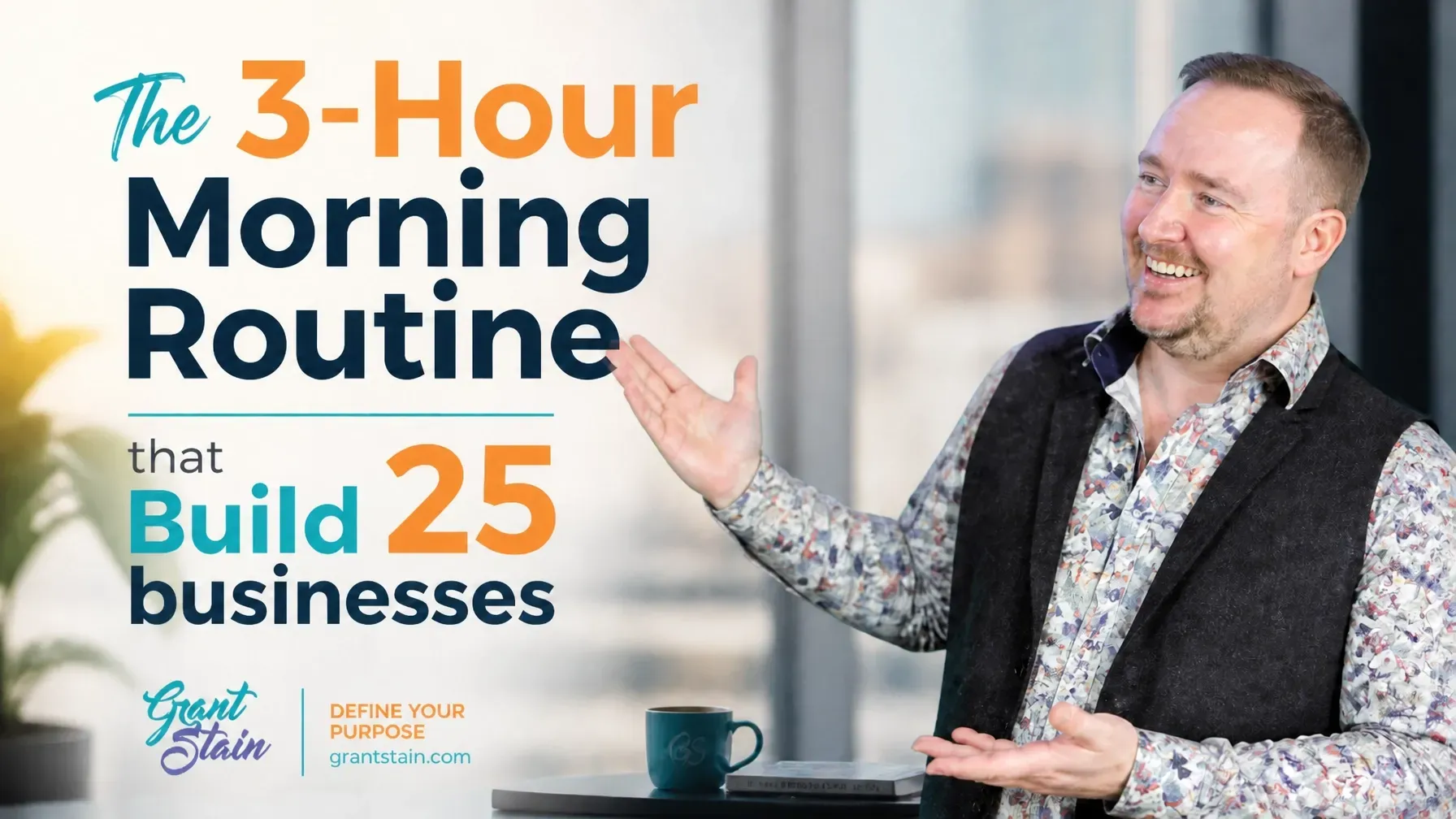
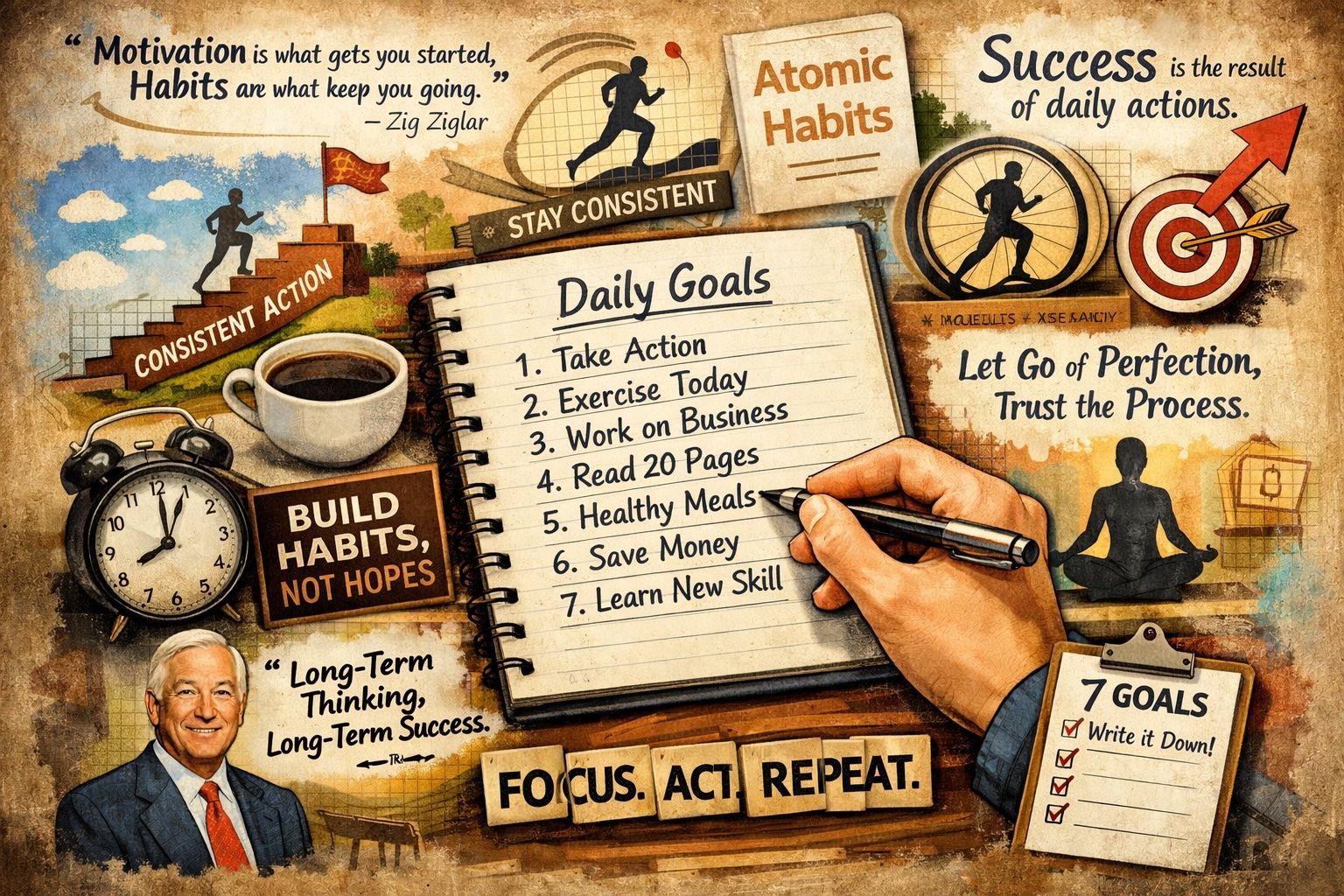
If you are a founder, does this morning routine sound familiar to you? Wake up, reach for the phone, scan a few messages, check the news, answer something “urgent,” and then your mind belongs to everybody else. Ring any bells? This is not an optimal founder daily routine. This is a fast-track system for becoming an employee of your inbox. I have built and operated 25 businesses across sectors including design, branding, marketing, recruitment, property, digital services, apps, leisure and more. I have also coached more than 300 startups across 12 countries over 15 years. The pattern is clear: your business cannot become more disciplined than you are. That is why I protect the first 180 minutes of my day. Not because waking early makes you virtuous. Not because you need to copy somebody’s ridiculous 4:30 am routine (although that may suit your clock better than mine!). You need a repeatable system that gives you energy, direction and meaningful progress before the noise starts. The idea here is to make your morning routine your own based on these principles. You don't need to copy me exactly but you must commit to a routine that sets you up for the day. Here is my exact morning routine for entrepreneurs. ⸻ The rule: your first three hours belong to you Before we get into the timetable, understand the principle. Your first three hours are not for: Email WhatsApp Slack Social media News Other people’s emergencies Random admin “Just quickly checking” anything The world will happily fill your morning with low-value demands. Let it wait. Research and founder routine analysis consistently point towards the same conclusion: protect your early hours, use visualisation and movement to activate your body, clarify your priorities, then complete one important piece of deep work before entering reactive mode. Calendar’s founder morning routine guide reaches the same practical conclusion: sustainability beats performance theatre. You do not need a perfect morning. You need a protected one. ⸻ Minutes 0–10: Wake, visualise and hydrate The first ten minutes are deliberately boring. That is the point. When I wake up, I do not touch my phone. I lie in bed and visualise my day and ideal life in a positive state of mind. This half-awake, half-asleep state is thought to be the most powerful state to impress upon your unconscious mind. I then get out of bed and begin my water, vitamins and freshly ground coffee routine. Your body needs a clear signal that the day has started, a solid routine once you are out of bed will do the trick. Do this: Get out of bed when the alarm goes off. Visualise your day whilst still in bed. Think positively about the meetings you have planned with awesome outcomes Imagine yourself completing your tasks in the best way possible Imagine yourself living your best life and how that will feel when achieved Enjoy this routine and feel the emotions of the results you are going to achieve that day before you actually start actioning them all. Most important: Your first decision of the day should be yours: not your phone’s. ⸻ Minutes 10–35: Reviewing your seven goals I always set myself up to write donw my goals witha feel good factor already prepped. For me that means making freshly ground coffee with a splash of cream whilst listening to my feel good play list in my kitchen. I then sit in my favourite chair and open my specially chosen notebook and begin my 7-step goal-setting method . I start by writing down my vision for my life and business on one side of the pad and then write down my annual goals. Your business is not separate from your life. If your health collapses, your business suffers. If your relationships deteriorate, your freedom becomes meaningless. If you stop learning, your strategy gets stale. My seven goal areas are: Health Finance Business Giving Relationships Learning Fun You do not need to work on all seven every morning. That would be another form of overcomplication. Instead, review your overall goals and ask: > “Which one action today will move one of these areas forward?” For example: Health: Complete your workout or plan your food diary. Finance: Review cash flow or follow up a valuable opportunity. Business: Improve your offer, sales process or customer experience. Giving: Support a team member, client or charitable cause. Relationships: Have an uninterrupted conversation with someone important. Learning: Read, practise or study something directly relevant to your future. Fun: Protect time for an experience that makes the journey worthwhile. Give this block a proper 25 minutes. Ten minutes to reconnect with the bigger vision. Ten minutes to review the seven areas. Five minutes to identify where today’s leverage actually sits. Your daily actions should serve your long-term vision. Otherwise, you are just being busy with better branding. ⸻ Minutes 35–50: Choose your one mission-critical action towards a goal Now choose your MIT: your Most Important Task. Not five tasks. One. Your MIT must be connected to a meaningful outcome and will nearly always be in accordance with one of your goals. It should require your best thinking and create progress that cannot be delegated easily. Examples include: Researching a new product Defining your positioning Preparing a funding proposal Booking an appointment Creating a recruitment plan Analysing your margins Building a strategic partnership Solving the operational bottleneck slowing your growth Contacting one of your highest-value prospects Do not choose “check emails”. Email is communication. It is not automatic progress. Write your MIT in a way that defines completion: Weak: “Work on marketing.” Strong: “Write the first draft of the homepage messaging.” Weak: “Think about sales.” Strong: “Create the three-stage sales follow-up sequence.” Weak: “Improve operations.” Strong: “Document the client onboarding process and identify two steps to delegate.” Spend the extra few minutes pressure-testing the task. Is it specific? Is it measurable? Will it actually move the needle? If not, tighten it up before the day starts dragging you off course. Clarity creates momentum. If the task is vague, your brain will avoid it. If the task is specific, you can begin. ⸻ Minutes 50–110: Move your body Everyone's routine will vary and you do not need to complete an Olympic training session before breakfast (but great if that's your thing). You do need to move. For me, exercise has always been part of the wider discipline required to run businesses. Movement raises your energy, clears mental fog and reminds you that action comes before motivation. This is where your routine may change depending on the length of time you spend exercising on that morning. Choose one depending on your exercise routine for the day: A brisk 15-minute walk Mobility and stretching Bodyweight exercises A gym session up to 1hr Cycling Light jogging A simple combination of squats, press-ups and planks I work out in the gym four or five times a week so two or three of those heavy sessions are on weekdays. My routine accommodates this, so the days I don't train in the morning, I walk or stretch. Move first. ⸻ Minutes 110–130: Shower and breakfast This is the transition between personal time and founder time, and the timing depends on how long you spent moving. Have your shower. Get dressed. Make your breakfast (I sometimes make breakfast before exercise if I'm doing a big weights session). The important point is that you do not drift into the working day. You move into it intentionally. Your environment matters here. Prepare the night before: Put your gym clothes or walking shoes where you can see them. Set up your workspace. Leave your notebook and pen ready. Decide what your first deep-work task will be. Keep unnecessary notifications switched off. A strong morning routine for entrepreneurs starts the night before. You remove friction so that the right action becomes the easiest action. Do not rely on willpower when preparation will do the job. ⸻ Minutes 130–170: Complete 40 minutes of deep work This is the engine room. For 40 minutes, you work on one task only. No inbox. No calls. No tabs that are not directly connected to the task. No checking your phone “just in case”. Set a timer. Close everything else. Tell your team you are unavailable if necessary. During this block: Work from a written outcome. Keep a notepad nearby for distracting thoughts. Capture interruptions rather than following them. Do not polish endlessly before creating a complete first version. Stop switching tasks when the work becomes difficult. The hard bit is often the valuable bit. This is where founders separate themselves from spectators. Everybody wants freedom, but very few people are willing to spend 40 uninterrupted minutes building the foundations that create it. You do not need more content about productivity. You need fewer distractions and more finished work. An example of this is I am writing this blog right now in the deep work session. ⸻ Minutes 170–180: Review, calendar, start the day The final 10 minutes are for transition. Do not leap straight from deep work into chaos. Record what you completed and decide what happens next. Use this simple close-down: Review the results of your deep-work block. Note the next action if the task is unfinished. Check your calendar and update where necessary. Triage messages into: Action Delegate Schedule Archive Respond only to genuinely urgent items. Now you can open email and messages because you have already created value. That is the difference between proactive and reactive work. You are not entering the day empty-handed, waiting for somebody else to decide what matters. You have already moved the business forward. ⸻ The free 180-minute founder checklist Save this checklist and use it tomorrow: 0–10: Visualise, get up, no phone 10–35: Routine, goals, write, feel the success 35–50: Choose one mission-critical action 50–110: Exercise 110–130: Shower, breakfast 130–170: Deep work 170–180: Record progress, review the calendar and triage messages Print it. Put it beside your desk. Follow it for 14 days before changing anything. If three hours is impossible because of children, shifts, travel or a demanding schedule, keep the order and compress the timings. A 10-minute version still works: Two minutes reviewing your MIT Three minutes moving Five minutes starting the most important task The system must work on your worst day, not only when life is behaving itself. ⸻ Stop copying routines that do not fit your life You do not need to wake at 5 am to become successful. You need to be consistent. Some founders are naturally sharp early. Others do their best thinking later in the day. The clock time is not the strategy. The protection, clarity and execution are the strategy. Do not copy a routine because it looks impressive online. Build one that supports your responsibilities, energy and ambitions. The best founder daily routine is one you can repeat when: You slept badly A customer is unhappy Your child is ill Cash flow is tight The team needs support The previous day went completely off the rails That is when your systems earn their keep. Your morning is not about becoming a productivity robot. It is about becoming the kind of leader who chooses the agenda before the world chooses it for you. If you want the complete framework behind this approach, download the free 7 Goals System Poster . Use it to clarify where you are going, identify the next step and make your progress visible. And if you are serious about building a business on solid foundations, learn more about my entrepreneurial coaching . You do not need another year of scattered effort. You need a clear goal, a protected morning and the discipline to do the work. To your success, Grant
Listen, if you’ve spent more than five minutes on social media lately, you’ve seen it. The doom-scrolling, the hand-wringing, and the absolute panic about Artificial Intelligence. The headlines are relentless. "AI will replace 40% of jobs by 2030." "The end of human creativity." "Will we all become obsolete?" It’s enough to make you want to throw your laptop in the Thames and move to a cabin in the woods. But here’s the thing: the naysayers are missing the most important part of the equation. They’re looking at the tech, but they’re completely ignoring the most powerful force on this planet. You. The human element is the ultimate wild card. We aren’t just passengers on this ride; we are the ones built the car, designed the engine, and are currently sitting firmly in the driving seat. If you’re feeling a bit of trepidation about what’s coming, let’s clear the air. It’s time to stop looking at AI as a threat and start seeing it for what it actually is: the greatest leverage tool in human history. The Myth of Human Obsolescence History is littered with the corpses of "expert" predictions that proved humans would be ruined by technology. When the printing press was invented, people feared it would destroy our memories and undermine the authority of the wise. Instead, it democratised knowledge and sparked the Renaissance. When the industrial revolution kicked off, the Luddites smashed the machines because they thought work was over. Instead, it created the middle class and a level of prosperity previously unimaginable. Every single time we innovate, the "sky is falling" crowd comes out in force. And every single time, they are wrong. Why? Because humans are natural-born innovators. We are survivors. We don’t just sit there and let change happen to us; we find ways to build, adapt, and thrive. We have an innate drive to create something from nothing. AI doesn't have that. It never will. AI doesn't wake up in the morning with a burning desire to disrupt an industry. It doesn't feel the "itch" to solve a problem that’s been bugging it all day. It doesn't have a "why." AI is totally unemotional to its own experience. It doesn't care if it wins. It doesn't care if it fails. It’s a tool, an incredibly sophisticated one, but a tool nonetheless. You are the one with the vision. You are the one with the soul. The Missing Piece: The Human Element The debates you see on the news are usually dry, academic, or purely mathematical. They talk about "output," "efficiency," and "automation." What they miss is the nuance of human connection, intuition, and the "gut feeling" that every successful entrepreneur relies on. Think about your business for a second. Is it just a series of tasks? Of course not. It’s a web of relationships, trust, and shared vision. AI can write a contract, but it can’t look a partner in the eye and know if they’re full of it. It can analyse market data, but it can’t feel the shift in cultural momentum before it shows up in the numbers. We are in the driving seat because we provide the direction. AI provides the speed. When you combine the raw processing power of AI with the creative spark of a human being, you don't get "disenfranchisement." You get a superpower. If you're still stuck in the mindset that you're competing against AI, you've already lost the game. The goal isn't to be a better calculator than the computer; the goal is to be the best possible human using the best possible tools. That’s how you achieve entrepreneurial empowerment . Welcome to the AI Nirvana Let’s talk about the "AI Nirvana" that the doomers don't want to mention. Everyone is so focused on what might be lost that they’re blind to what is being created. We are on the verge of a creative explosion. Imagine a world where the boring, soul-crushing admin that eats up 60% of your day simply vanishes. No more filing, no more basic data entry, no more scheduling nightmares. When that happens, what are you going to do with all that extra brainpower? You’re going to create. We are going to see entirely new industries born in the next five years that we can’t even name yet. Just as the internet created the "Social Media Manager" and the "Cloud Architect," AI is going to create roles that focus entirely on high-level strategy, human-centric design, and complex problem-solving. Problems that have plagued humanity for decades, diseases that were too complex to model, logistical nightmares that wasted half the world’s food, energy inefficiencies, are going to be solved. Not by AI alone, but by humans using AI to see patterns we couldn't see before. This isn't a dark future. It’s a bright one. It’s a world where human creativity is finally unshackled from the mundane. Protecting Against the Negatives (The Adult Way) Now, I’m not saying there won't be challenges. Every major shift has friction. Yes, some roles will change. Yes, some traditional jobs will fade away. But rather than cowering in fear, we need to be proactive. Iterate or Die: You need to be looking at your business right now and asking: "Where can I use this to move faster?" If you're not doing it, your competitor is. Check out my 73-point marketing audit to see where you can tighten your systems. Double Down on "Human" Skills: Empathy, communication, leadership, and ethical judgment are now the most valuable assets you own. You can't outsource your soul. Stay in the Driver's Seat: Don't let the tech dictate your direction. Use it to execute your vision. If you're worried about being "replaced," it's usually because you’ve stopped innovating. You’ve become a cog in a machine. The solution isn't to stop the machine; it's to stop being a cog. Take a strengths test and find out what makes you uniquely capable of leading in this new era. The Choice is Yours At the end of the day, you have two choices. You can join the chorus of naysayers, complaining about how "it was better in the old days" while the world passes you by. You can let fear dictate your business strategy and end up as a footnote in history. Or, you can embrace the fact that you are an innovator. You can realise that AI is the most incredible gift for someone with a vision. It’s the ultimate force multiplier for the entrepreneur who refuses to be disenfranchised. I’ve coached hundreds of founders, and the ones who win are always the ones who see opportunity where others see obstacles. They don't ask "Will this replace me?" They ask "How can this make me ten times more effective?" Sound familiar? It should. Because that’s the entrepreneurial spirit. It’s messy, it’s fast, and it’s unstoppable. Stop listening to the people who are afraid of the future. They aren't the ones building it. The AI revolution isn't about the machines. It’s about what we do with them. We are the creators. We are the innovators. And we are just getting started. If you’re ready to stop being a victim of the headlines and start taking control of your business’s future, let’s talk. Whether it’s through entrepreneur coaching or just getting your foundations right, the time to move is now. The "AI Nirvana" is waiting. Are you coming? To your success, Grant
Let’s be honest: most people in my position would tell you that they want to help everyone. They’d post some fluffy quote about "unlimited potential" and invite you to "jump on a discovery call" so they can sell you a dream wrapped in a 12-month contract. I don’t do that. In fact, I turn down about 80% of the founders who reach out to me for coaching. Does that make me a bit of an arse? Maybe. Does it make me elitist? I hope not. The intention is to ensure I'm effective. I’ve spent over 20 years in the trenches. I’ve personally founded 24 businesses in five different countries. If there’s one thing I’ve realised, it’s that most founders aren't looking for a coach, they’re looking for a miracle. And I don’t sell miracles. I sell systems, accountability, and the hard-won perspective that comes from two decades of seeing what actually works. If you’re wondering why I might say "no" to you, or more importantly, how you can become the kind of founder I say "yes" to: read on. The "Spark" vs. The "Curiosity" Most founders come to me because they are "curious" about coaching. They’ve heard it’s what successful people do. They think a weekly Zoom call will magically fix their cash flow or settle their internal team dramas. Curiosity is cheap. Commitment is expensive. When I talk to a founder, I’m looking for a specific "spark." It’s not about how much money they’re making right now; it’s about their hunger for freedom and their willingness to set their ego on fire to get it. I work with people who are obsessed with making their own choices. People who realise that being a "boss" is meaningless if you’re still a slave to your inbox and your overheads. If you don't have that fire, no amount of coaching is going to ignite it for you. The Magic Pill Delusion Here is a reality check: Coaching is not a magic pill. If your business is a flaming inferno of half built bridges because you refuse to look at your numbers, a coach isn't a fire extinguisher. If you’re lazy, a coach isn't a shot of adrenaline. I’ve seen founders treat coaching like a confessional. They show up, admit their "sins" (I didn't do the work, I didn't hit the targets, I got distracted by a new shiny object), and expect me to absolve them so they can feel better. Not on my watch. My coaching is for the founders who understand that I am the Obi One, but they are the Luke Skywalker. I provide the experience, I point out the pitfalls, and I show you the shortcuts I’ve found over 20 years from either falling through them myself or narrowly avoided thanks to my coach at the time (or Yoda, lol - love a Star Wars metaphor!). If you’re looking for someone to do the work for you, you aren't actually ready to be an entrepreneur. 20 Years, 300+ Startups, 12 Countries Why am I so picky? Because my reputation is built on real experience, not just coaching qualifications. I’ve seen the 7 fatal mistakes solo founders make played out in real-time, over and over again. I turn people down because coaching is about the right fit and feeling very confident that my mentee is someone I know I can help: either because they are ready to listen or because they have built a foundation worth scaling yet. The Foundation: Are You "System-Ready"? Being "ready" for high-level coaching means you have a foundation. You can’t build a skyscraper on a swamp. Before I even consider working with someone deeply, I want to know about their systems. Not just their CRM or their marketing tech stack, but their personal operating system. 1. The Morning Routine Winning the day starts with managing mindset first and foremost. My clients know that discipline is the prerequisite for freedom. If you can't manage your first two hours of the day, how on earth are you going to manage a scaling organisation? 2. The 7-Goal-Setting Process I’m a fanatic about goal setting. But not the vague "I want to be rich" nonsense. I use a specific 7-goal-setting process that covers every area of life: Business, Finance, Health, Relationships, Learning, Giving, and fun. If you don't have a target, you’ll hit nothing every single time. My coaching is about alignment. If your business is thriving but your health is in the bin and your relationships are failing, you aren't successful: you’re just a high-earning wreck. Why I Choose the 20% The 20% I do work with? They are the good fit, coachable maniacs who get that being an entrepreneur is a lifestyle in itself not the vehicle to the lifestyle. They are the ones who realise that the ultimate currency isn't GBP or USD: it’s choice . They want to work towards the privilege of building a legacy whilst still having the time to be with their families, whilst creating something that actually outlasts them. They understand core values aren't just something you print on a poster; they are the DNA of the company. When I find a founder who has that spark, who is disciplined, and who is ready to be challenged, we do incredible things. We don't just "grow" the business; we transform it. How to Know If You’re Ready So, are you part of the 80% or the 20%? Ask yourself these questions: Am I looking for a mentor or a babysitter? (If you need someone to remind you to do your basic tasks, you need a virtual assistant, not a coach.) Am I willing to be told I’m wrong? (If your ego is too fragile to hear that your "brilliant" idea is actually a bottleneck, don't call me.) Do I have a baseline of discipline? (Have you mastered your morning? Have you tried to implement a system like the 7-goals-poster ?) Is my business "coachable"? (Do you have a product or service that actually provides value, or are you just "grinding" for the sake of it?) If you can answer those honestly and still feel like you’re ready to level up, then maybe we should talk. Don't Guess. Test. I don’t expect you to take my word for it. Most founders think they are ready, but they haven't actually looked at the data. Before you even think about applying for entrepreneur coaching , take the strengths test . See where you actually stand. I’m not interested in working with the version of yourself you project on LinkedIn. I’m interested in the version of you that shows up when things are falling apart and the pressure is on. The Bottom Line I turn down 80% of requests because I value my time, and I value yours. There is no point in me taking your money if you aren't in a position to execute the strategies I give you. It’s bad for my brand, and it’s a waste of your capital. But for the 20% who are ready... for the founders who have the foundation, the spark, and the absolute refusal to settle for a "normal" life... the results are nothing short of life changing (you see why I love my job!). Success isn't about working harder; it's about working with the right people, with the right systems, at the right time. Stop being "curious" and start being committed. If you think you're ready to be one of the few, get in touch . But don't be surprised if I tell you you’re not there yet. I’d rather tell you the truth today than watch you fail tomorrow. To your success, Grant

Let me guess: you've been scrolling through Instagram, watching people your age sipping cocktails on a beach at 2PM on a Tuesday, captioning it "living the laptop lifestyle" or "escaped the 9-5 grind." You've seen the Lamborghinis, the "passive income," the overnight success stories. And you're thinking, "Yeah, I could do that. I'll work hard, hustle a bit, post some motivational quotes, and boom, financial freedom." Right? Wrong . Listen, I've coached over 300 startups through their early days, and I need to tell you something that the Instagram gurus won't: most people who start businesses fail. And I don't mean they fail spectacularly in some heroic blaze of glory. I mean they quietly earn less than they did in their job, work twice the hours, and eventually slink back to employment with their tail between their legs. Sound harsh? Good. Because if that scares you off, you've just saved yourself years of pain and a hefty chunk of money. The Numbers Don't Lie (Even When We Want Them To) Let's talk facts, because I'm not here to blow sunshine up your backside. " Only 4% of startups ever hit £1 million in turnover." Four percent. That's 96 out of every 100 businesses never getting anywhere near that magical seven-figure mark that sounds so good on a podcast. And for those lucky few who do? It takes an average of 2.5 to 3 years minimum. Many don't see it within 5 years. That's three years of grinding, pivoting, barely paying yourself, and wondering if you've made a massive mistake. Here's the kicker: " 41% of small business owners earn less than they did in their previous 9-5 job ." Less. After all that risk, all that stress, all those 60-hour weeks, they'd have been better off financially staying put. Over 20% of businesses fail within their first year. Nearly half don't make it to year five. And of those solo entrepreneurs dreaming of building a team and "scaling"? Only 3-17% ever grow to hire employees and become actual employer firms. These aren't stats I'm pulling from some doom-and-gloom think piece. This is reality. This is what happens when passion meets market forces, when optimism crashes into cash flow problems, when "I have a great idea" meets "the customer doesn't actually care." So Why Am I Telling You This? Am I trying to put you off? Kill your dreams before they start? Absolutely not. I'm trying to save you from being another statistic. Another person who quit their job on a wing and a prayer, burned through their savings in 18 months, and had to explain to their family why they're moving back in at 34. The issue isn't that entrepreneurship is hard, we all know it's hard. The issue is that most people think they're ready when they're absolutely not. They confuse excitement with preparation. They mistake motivation for capability. After working with hundreds of founders, I can tell you this: " Entrepreneurship isn't about the destination, it's about whether you've got the foundations to survive the journey." The lifestyle you see on social media? That's year 7, not year 1. And most people never make it past year 2. The Unsexy Truth About What It Actually Takes Here's what nobody posts on Instagram: You're going to work more hours than you ever did in your job. Your first year? Think 50-60 hours a week, minimum. Weekends included. No, you can't outsource everything on day one, you haven't got the money. You're going to earn less. Probably for at least the first year, maybe longer. Can you handle that? Can your family? Your mortgage lender? You're going to question yourself constantly. Every day you'll wonder if you're deluded. Every setback will feel personal because it is personal, this is your baby. You need to actually know how to run a business. Not just do the thing you're good at, marketing, design, whatever, but understand P&Ls, cash flow, break-even points, customer acquisition costs. When's the last time you read a balance sheet? Do you know what gross margin means? These aren't optional extras. They're the difference between profit and bankruptcy. You need support systems. Mentors who've been there. A partner who understands why you're stressed. Friends who won't roll their eyes when you cancel drinks for the third week running. Family who won't tell you to "just get a real job" the first time things get tough. Before You Quit Your Job, Answer These I've developed a framework over the years for assessing readiness. Not readiness to have an idea, everyone's got ideas. Readiness to actually build a business that doesn't destroy your life. Can you honestly answer yes to these? - Have you done the research and actually understand the market? - Do you have 6-12 months of living expenses saved (not just "some savings")? - Have you created a proper business plan with realistic financial projections? - Do you know your break-even point and startup costs down to the pound? - Can you identify your exact target customer and why they'll buy from you instead of your competitors? - Are you prepared to potentially earn less for the next 2-3 years? - Does your family support this decision, or are you going to be fighting battles on two fronts? If you're hedging on more than two of these, you're not ready. And that's okay, better to know now than after you've burned your bridges. It's About the Foundations, Not the Flash Look, I'm not trying to crush your entrepreneurial spirit. I've built businesses. I've helped 300+ companies get off the ground. I believe in entrepreneurship, done right. But "done right" means building proper foundations before you start stacking up floors. It means developing the skills, knowledge, and mindset that separate the 4% from the 96%. The entrepreneurs who make it aren't necessarily the most talented or the ones with the best ideas. They're the ones who prepared properly. Who learned the fundamentals. Who built systems instead of winging it. Who understood that success is about doing boring things consistently, not having one viral moment. They're the ones who treated entrepreneurship as a serious professional decision, not an escape plan from a job they didn't like. The Real Question So here's what I want you to ask yourself: are you running toward something, or running away from something? If you hate your job and think starting a business will be easier, I've got bad news. It won't. It'll be harder in ways you can't imagine. But if you're genuinely prepared to work harder than you've ever worked, to learn things that don't come naturally, to sacrifice lifestyle in the short term for a potential long-term payoff, and you've got the foundations in place, the knowledge, the savings, the support, the actual plan, then maybe, just maybe, you're ready. And if you're not ready yet? That's brilliant. Because now you know what you need to work on before you take the leap. The wannabe entrepreneurs quit their jobs tomorrow and hope for the best. The real entrepreneurs build their foundations first , develop their skills, understand the reality of what they're getting into, and then make their move from a position of strength, not desperation. Which one are you going to be? To your success, Grant
This is a subtitle for your new post

Are You Making These 5 Fatal Startup Mistakes? What 15 Years Coaching 300+ Companies Taught Me